Felix Klein
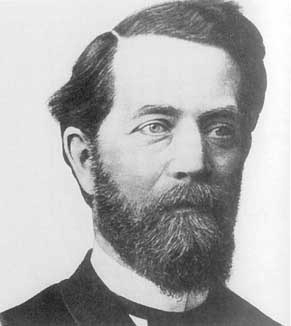
Written by: The Editors of Encyclopædia Britannica Last Updated: 1-23-2017 See Article History Alternative Title: Christian Felix Klein
Felix Klein’s full name is Christian Felix Klein. (Born on April 25, 1849, in Düsseldorf, Prussia, Germany – Died on June 22, 1925, in Göttingen, Germany), this German Mathematician described geometry as a study of the properties of a space that are invariant under a given group of transformations, known as the Erlanger Programme, which deeply influenced the development of mathematics.
As a student at the University of Bonn (Ph.D., 1868), Klein worked closely with the physicist and geometer Julius Plücker (1801–1868). After Plücker’s death, he worked with the geometer Alfred Clebsch (1833–1872), who headed the Mathematics Department at the University of Göttingen. On Clebsch’s recommendation, Klein was appointed professor of mathematics at the University of Erlangen (1872–1875), where he set forth the views in his Erlanger Programme. These ideas reflect his close cooperation with the Norwegian mathematician Sophus Lie, whom he met in Berlin in 1869. Before the Franco-German war broke out in July of 1870, they were in Paris to develop their initial ideas about the role of the Group geometric transformation and theory of differential equation.
Klein then taught at the Institute of Technology in Munich (1875–80), Universities of Leipzig (1880–1886) and Göttingen (1886–1913). In 1874, he was the editor of Mathematische Annalen (“Annals of Mathematics”), one of the world’s leading mathematical journal. His works on elementary mathematics, including Elementarmathematik vom höheren Standpunkte aus (1908; “Elementary Mathematics from an Advanced Standpoint”), reached a wide public. His technical papers were collected in Gesammelte Mathematische Abhandlungen, 3 vol., (1921–1923; “Collected Mathematical Treatises”).
Klein’s work has given the greatest impact in the field of mathematics. He can be regarded as the chief architect of modern mathematical society. Göttingen once appeared as one of the world’s leading research centres under the leadership of Klein and David Hilbert (1862 – 1943) during the period from 1900 to 1914. After Klein’s retirement, Richard Courant (1888-1972) conferred Klein as the organisational leader of this still highly spirited community.